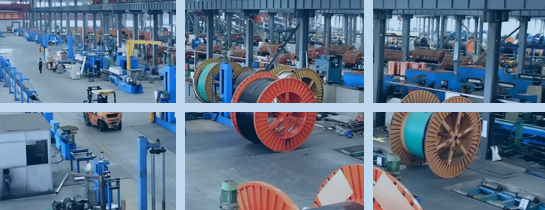
With the in-depth advancement of intelligent manufacturing, Industry 4.0 has put forward relatively high requirements for the interconnection and reliability of the underlying equipment in factories. As the core link for equipment power and control, the performance of industrial machinery and equipment cables directly determines production efficiency and stability. Especially in application scenarios such as automated robots and high-precision CNC machine tools, the demand for oil-resistant, blow-resistant and anti-interference drag chain cables and servo cables is growing rapidly.
In response to this trend, cable manufacturers are committed to developing more resilient and intelligent industrial connection solutions. The new generation of high-flexibility control cables adopts a brand-new conductor twisting technology and elastomer sheath. Even during over ten million reciprocating bending movements, they can ensure the absolute stability of signal transmission. Meanwhile, the servo motor cables with shielding layers can effectively resist electromagnetic interference, ensuring error-free communication between devices and creating a stable and reliable "neural network" for the digital workshop.
It is widely believed in the industry that the upgrading of industrial cables is the foundation of the digital transformation of manufacturing. In the future, industrial cables will no longer merely be carriers for transmitting energy; they will also integrate data collection and condition monitoring functions, moving towards an intelligent direction. This will help factories achieve predictive maintenance, reduce unplanned downtime, and thus gain an edge in the fierce market competition.